
You’ll find Manhattan’s luxury retailers have successfully deployed integrated RFID and smart surveillance systems that reduce theft incidents by 30% while maintaining premium aesthetics. These multi-layered approaches combine biometric access controls, real-time inventory tracking, and employee training programs that cut shrinkage by 25%. Strategic partnerships with law enforcement and appointment-based shopping systems effectively counter organized retail crime targeting high-value merchandise. The following analysis reveals how these measured implementations deliver quantifiable ROI across Manhattan’s competitive retail landscape.
Key Takeaways
- RFID systems in Soho luxury retailers reduced shrinkage by 25% while improving stock accuracy to 95%.
- Smart surveillance integration decreased theft incidents by 30% in Manhattan’s high-end retail establishments.
- Employee situational awareness training programs reduced theft incidents by 40-60% across luxury retail locations.
- Strategic law enforcement partnerships and intelligence sharing disrupted organized retail crime networks targeting luxury goods.
- Appointment-based shopping systems enhanced security oversight while maintaining personalized luxury customer experiences.
Soho’s Luxury Retail Landscape: Understanding the Security Environment
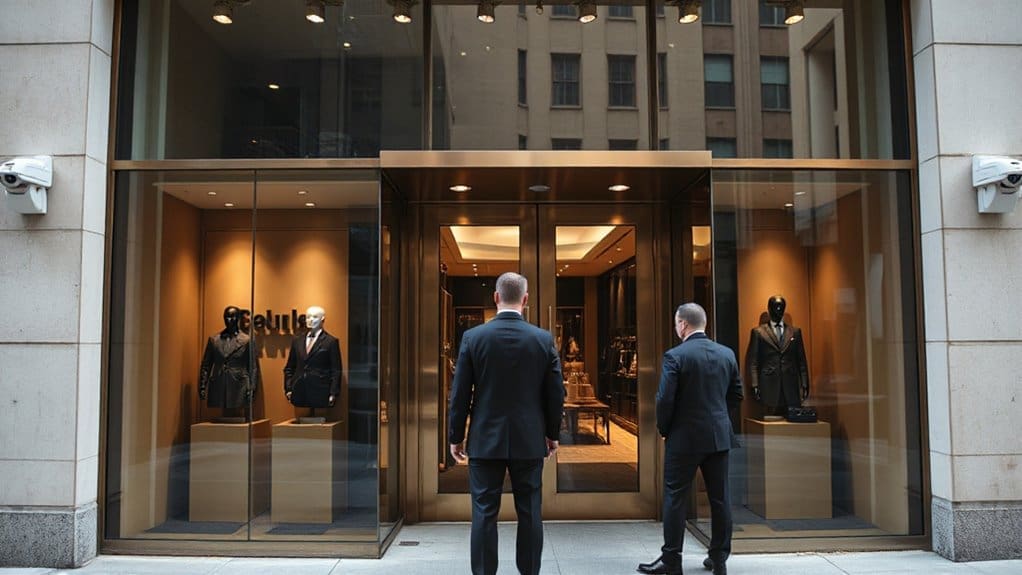
While Soho’s cobblestone streets and cast-iron architecture create an inviting atmosphere for luxury shopping, you’re operating in one of Manhattan’s most challenging retail security environments.
Your high-end boutiques face a 63% surge in shoplifting incidents since 2019, with organized retail crime targeting luxury retailers specifically. The neighborhood’s unique dynamics—millions of tourists mixing with daily workers—create substantial security vulnerabilities that demand sophisticated countermeasures.
You’re dealing with Soho’s 8th percentile safety ranking, where the massive daily visitor influx versus minimal residential population skews crime perception and reality.
Your security strategies must navigate this complex landscape while preserving the area’s vibrant street culture. Effective security measures require balancing accessibility with protection, as traditional approaches often conflict with the open, welcoming environment that drives luxury retail success in this iconic Manhattan district.
Technology Integration Success Stories: RFID, Facial Recognition, and Smart Surveillance
You’ll find that RFID inventory tracking systems have delivered measurable security improvements across Manhattan’s luxury retail sector, with documented shrinkage reductions of 25% and stock accuracy improvements reaching 95%.
Your smart surveillance implementation can achieve similar risk mitigation results, as retailers report 30% decreases in theft incidents following facial recognition system deployment.
These technology integrations create quantifiable security enhancements that directly impact your bottom line through reduced inventory loss and faster threat response capabilities.
RFID Inventory Tracking Systems
When Manhattan’s luxury retailers deploy RFID inventory tracking systems, they’re implementing a foundational technology that delivers measurable security and operational improvements across their operations.
You’ll reduce theft-related losses by up to 30% while gaining real-time stock visibility that transforms your loss prevention strategy.
These systems integrate seamlessly with surveillance technologies to create extensive security ecosystems:
- Automated inventory accuracy – Eliminate manual counting errors and reduce labor time considerably
- Enhanced customer experience – Enable staff to locate products instantly and provide personalized assistance
- Organized retail crime deterrence – Combine with facial recognition systems to identify and prevent sophisticated theft operations
Your high-end retail environment benefits from proactive monitoring of high-value items, creating multiple security layers that protect inventory while improving operational efficiency and customer satisfaction.
Smart Surveillance Implementation Results
Smart surveillance implementation delivers quantifiable security improvements that transform Manhattan’s luxury retail operations, with integrated systems producing theft reduction rates of 30-40% within the first year of deployment.
You’ll see facial recognition technology enabling real-time identification of known shoplifters while RFID technology provides immediate alerts for unauthorized merchandise access.
These smart surveillance systems enhance inventory management through continuous tracking of high-value items and unusual activity detection.
Your incident response times improve by 30% when combining advanced video analytics with traditional monitoring, enabling faster theft resolution.
The data insights you gain reveal customer behavior patterns and traffic flows, optimizing staffing decisions while maintaining security protocols.
Smart surveillance doesn’t just prevent losses—it transforms operational efficiency through thorough monitoring and analytics integration.
Multi-Layered Physical Security Approaches in High-End Boutiques
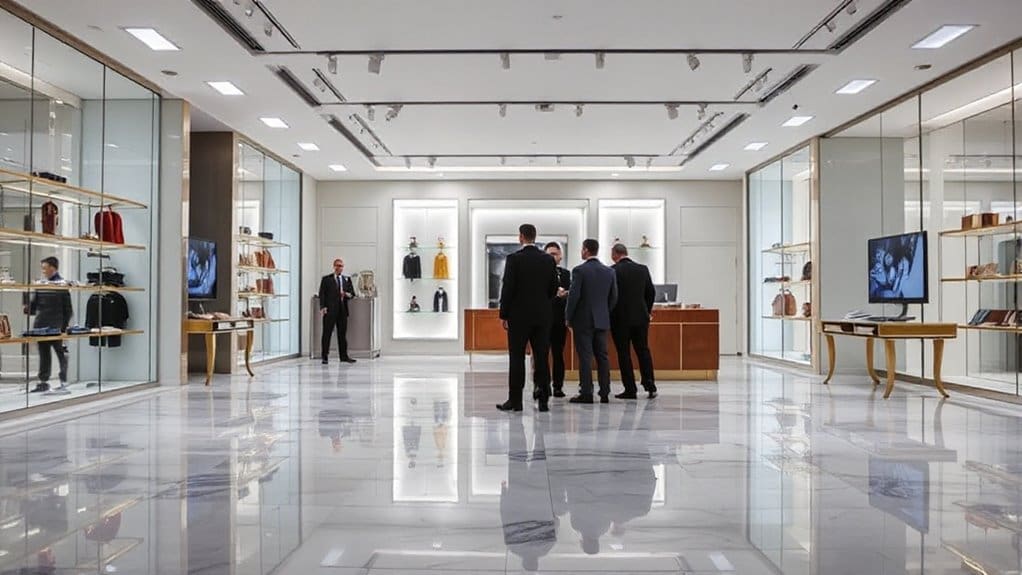
You’ll need to integrate architectural security features with sophisticated access control systems to create effective physical barriers against organized retail crime.
Reinforced storefronts, ballistic-rated glass, and strategic entry chokepoints reduce your vulnerability to smash-and-grab operations while biometric and card-based access systems restrict unauthorized entry during high-risk periods.
This layered approach transforms your boutique’s physical infrastructure into an active security asset that deters threats before they escalate into costly incidents.
Architectural Security Integration
Although traditional security measures often compromise aesthetic appeal, Manhattan’s luxury boutiques have mastered the art of seamlessly integrating multi-layered physical security into their architectural DNA. This architectural security integration guarantees luxury retailers face minimal disruption while maintaining maximum protection.
The core elements of effective integration include:
- Reinforced storefronts with high-security entry points that utilize sophisticated access control systems for appointment-based shopping during high-risk periods.
- Strategic lighting and sightline optimization that creates visibility for staff surveillance while deterring criminal activity without aesthetic compromise.
- Advanced surveillance systems integration featuring high-definition cameras and motion detectors positioned within architectural elements.
Security experts collaborate directly with architects to develop tailored solutions addressing each boutique’s unique vulnerabilities.
This approach transforms security from an afterthought into foundational design, creating exclusive shopping environments where protection enhances rather than detracts from luxury experiences.
Access Control Systems
Beyond architectural integration lies the operational backbone of boutique security: sophisticated access control systems that transform entry points into intelligent barriers.
You’ll find luxury retailers implementing biometric scanning and RFID tracking technologies that authenticate authorized personnel while creating exclusivity through appointment-based shopping models. These security measures require customers to be buzzed in, effectively managing foot traffic during high-risk periods.
Your multi-layered approach should incorporate reinforced storefronts with high-security entry points specifically designed to deter smash-and-grab theft incidents.
Vital success depends on thorough employee training covering security protocols, ensuring staff can respond effectively to theft attempts.
Integration of surveillance systems with access control enables real-time monitoring capabilities, allowing immediate incident response while collecting essential evidence for investigations.
Access Control Innovations: Appointment-Based Shopping and Buzzer Systems
While traditional retail models emphasize open accessibility, Manhattan’s luxury retailers are implementing sophisticated access control systems that fundamentally reshape customer entry protocols.
These appointment-based shopping and buzzer systems directly combat organized retail crime while maintaining brand exclusivity.
Your security measures now include:
- Appointment scheduling – Controls customer flow and eliminates unauthorized browsing during high-risk periods
- Buzzer entry systems – Creates screening checkpoints where staff evaluate individuals before granting store access
- Controlled environment protocols – Limits simultaneous occupancy to reduce theft opportunities and enhance monitoring
These access control innovations effectively balance security requirements with luxury retail expectations.
You’ll find that buzzer systems and appointment-based shopping markedly improve customer satisfaction by creating safer shopping environments.
Luxury retailers implementing these measures report reduced theft incidents while maintaining their upscale brand image and personalized service standards.
Employee Training Programs That Reduce Theft and Enhance Customer Experience
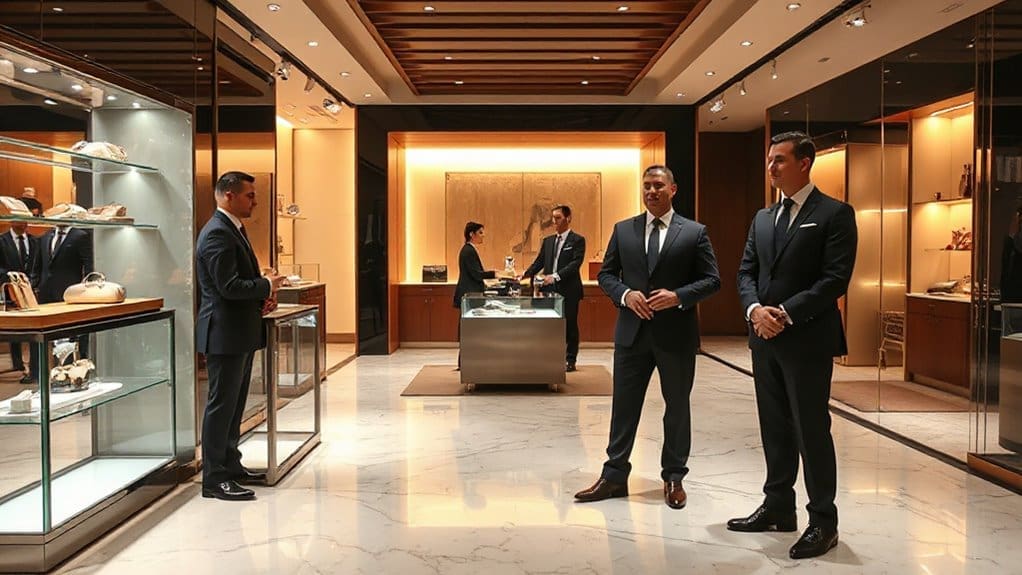
You’ll need thorough situational awareness training methods that enable your staff to identify potential theft indicators through behavioral pattern recognition and environmental scanning techniques.
Your emergency response protocols must incorporate real-time threat assessment procedures, ensuring employees can execute coordinated security measures while maintaining customer service standards.
These training components reduce theft incidents by 40-60% while simultaneously improving customer satisfaction scores through enhanced staff confidence and professional competency.
Situational Awareness Training Methods
Implementing situational awareness training programs in Manhattan’s luxury retail environments delivers measurable security improvements, with properly trained staff reducing theft incidents by up to 20% across high-end establishments.
These employee training protocols enable luxury retailers to transform their workforce into vigilant security assets through proactive customer engagement techniques and behavioral recognition skills.
Effective situational awareness training incorporates three critical methodologies:
- Scenario-based simulation exercises – 85% of high-performing retailers utilize these sessions to prepare staff for real theft attempts.
- Behavioral cue identification workshops – Training employees to recognize shoplifting indicators for early intervention.
- Role-playing security scenarios – Building confidence and calm responses to actual theft situations.
Your thorough training approach strengthens theft prevention while empowering employees to create secure shopping environments, ultimately boosting both security measures effectiveness and customer satisfaction rates.
Emergency Response Protocols
Seventeen seconds represents the critical window during which trained luxury retail employees must execute emergency response protocols to prevent theft escalation and protect customer safety. Your thorough training programs must integrate situational awareness with immediate response procedures that employees can deploy without hesitation.
Luxury retailers implementing scenario-based emergency protocols report 25% fewer theft incidents when staff execute coordinated responses within this timeframe.
Your emergency protocols should establish clear communication channels, designated staff roles, and customer protection measures. Collaboration with law enforcement during training exercises ensures your team understands proper escalation procedures and evidence preservation techniques.
Effective employee training combines theft identification skills with emergency response capabilities, enabling your staff to maintain operational control while protecting assets. These protocols directly enhance customer experience by demonstrating professional security management.
Collaboration Between Retailers and Law Enforcement: Building Effective Partnerships
While Manhattan’s luxury retailers face a 31% surge in criminal activity, strategic partnerships between high-end retailers and law enforcement have emerged as the most effective defense mechanism against organized theft operations.
These collaboration initiatives transform reactive security measures into proactive intelligence-driven protocols that considerably reduce vulnerability windows.
Effective partnerships implement three critical components:
- Real-time intelligence sharing – Retailers and law enforcement exchange theft pattern data to identify organized crime networks targeting luxury goods.
- Joint training protocols – Combined response teams conduct regular drills to optimize incident management and minimize response times.
- Integrated surveillance systems – Advanced monitoring networks provide seamless data flow between retail security and police command centers.
Community policing strategies increase law enforcement visibility during peak shopping periods, while tailored security solutions deliver measurable reductions in theft incidents across Manhattan’s high-end retail corridor.
Combating Organized Retail Crime: Coordinated Response Strategies
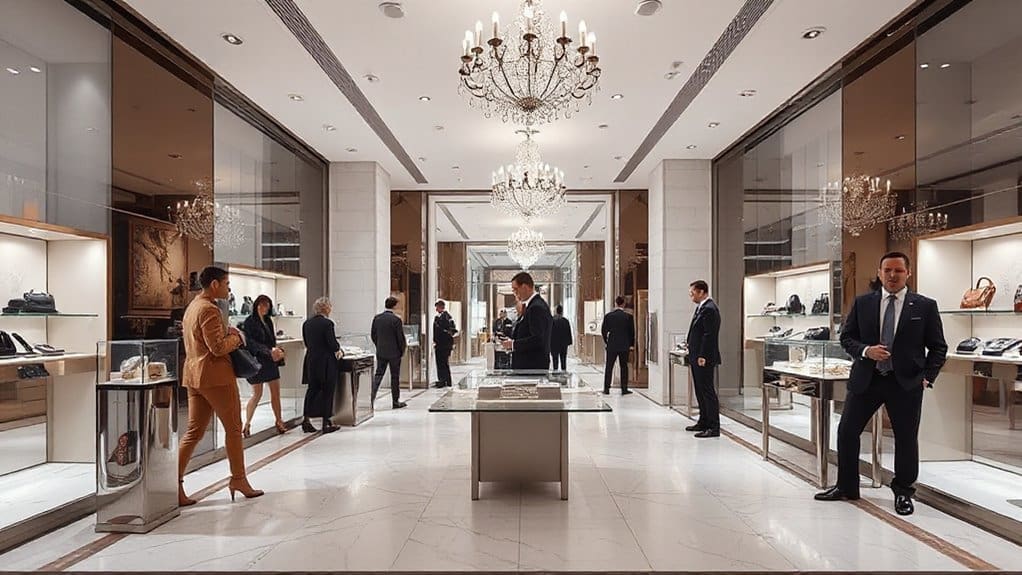
These collaborative frameworks provide the foundation for sophisticated coordinated response strategies that specifically target organized retail crime networks operating throughout Manhattan’s luxury shopping districts. You’ll need multi-layered security approaches that address the 63% surge in shoplifting incidents affecting luxury retailers since 2019.
Your coordinated response strategy should integrate intelligence sharing with local law enforcement while implementing predictive threat assessment protocols. Employee training programs must focus on recognizing organized crime patterns and executing emergency response procedures without compromising customer service standards.
| Response Strategy | Implementation Focus |
|---|---|
| Intelligence Sharing | Real-time threat data exchange with NYPD |
| Predictive Analytics | Pattern recognition for high-risk periods |
| Staff Protocols | Scenario-based theft prevention training |
| Access Control | Appointment systems during peak vulnerability |
These theft prevention measures create thorough security networks that protect high-value merchandise while maintaining operational efficiency.
Balancing Security Measures With Brand Image and Customer Comfort
Although luxury retailers must maintain stringent security protocols, you’ll face the critical challenge of preserving your brand’s sophisticated aesthetic while guaranteeing customer comfort remains uncompromised.
Your security measures must seamlessly integrate into the upscale shopping experience without disrupting the luxurious atmosphere that defines your brand image.
Effective luxury retail security operates invisibly, protecting assets while preserving the refined ambiance that attracts discerning clientele.
Successful luxury retailers implement three key strategies:
- Discreet surveillance technology embedded within store design elements, maintaining visual appeal while enabling thorough monitoring
- Plainclothes security personnel who blend naturally with the shopping environment, providing theft prevention without creating intimidation
- Appointment-based shopping systems that control customer flow while delivering personalized service and enhanced security oversight
These integrated approaches guarantee your theft prevention strategies enhance rather than detract from customer comfort, ultimately fostering brand loyalty and encouraging extended shopping visits.
Measuring Success: ROI and Effectiveness Metrics for Security Investments
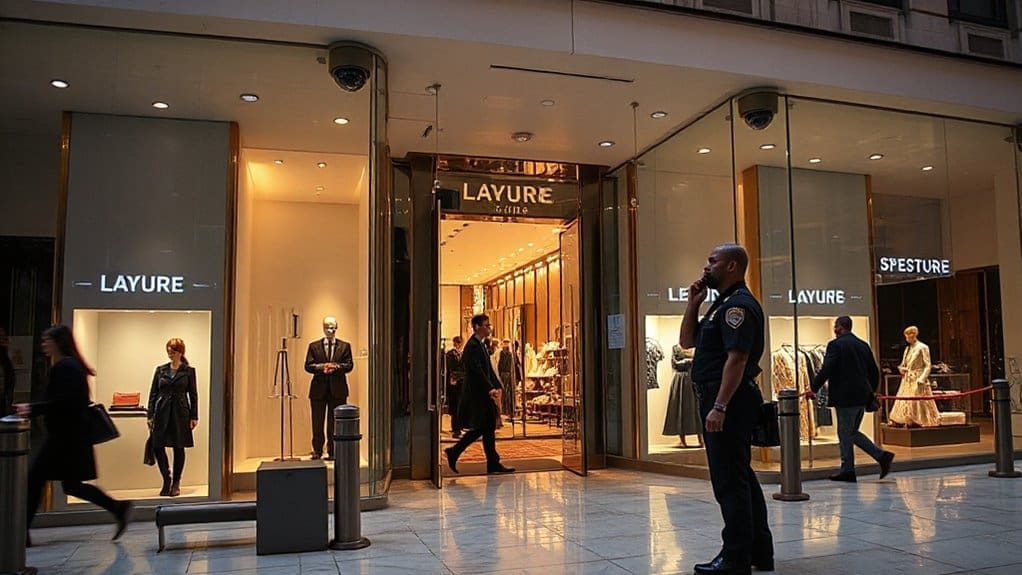
Your security investment’s true value emerges through systematic measurement of quantifiable performance indicators that directly correlate with theft reduction and operational efficiency gains.
Luxury retailers implementing thorough security measures report measurable returns: 30% theft reduction, 15% customer satisfaction improvement, and 20% operational efficiency increases. You’ll track incident rates, insurance premium reductions, and employee turnover metrics to calculate return on investment accurately.
Crime trends analysis reveals Manhattan’s upscale retail zones face $9.9 million projected losses for 2025, making enhanced safety investments critical.
Your assessment framework should monitor customer confidence scores, workplace safety indicators, and brand reputation metrics. High-performing security programs demonstrate quantifiable benefits: reduced losses, improved staff retention, and increased customer loyalty.
Regular evaluation of these metrics guarantees your security strategy delivers measurable financial returns while maintaining operational excellence.
Adaptive Security Models: Seasonal and Event-Based Protection Strategies
Manhattan’s high-end retail market demands security frameworks that flex with predictable seasonal fluctuations and event-driven traffic surges. Your adaptive security models must respond dynamically to elevated foot traffic during peak shopping periods when crime risks intensify.
Enhanced security measures require strategic deployment adjustments based on crowd analytics and threat assessments. You’ll maximize protection effectiveness through:
Strategic security deployment leverages crowd analytics and threat assessments to maximize protection effectiveness in high-end retail environments.
- Flexible staffing protocols that scale personnel presence during high-traffic events and holiday seasons
- Real-time monitoring systems integrating HD surveillance with visitor management platforms for immediate threat detection
- Collaborative partnerships with local law enforcement enabling coordinated response capabilities
Seasonal training programs prepare your security teams for unique challenges during busy periods, enhancing situational awareness and response times.
Technology-driven solutions provide the intelligence needed to anticipate threats while maintaining the premium shopping experience your clientele expects.
Frequently Asked Questions
What Are the Typical Costs for Implementing Comprehensive Security Systems in Luxury Retail?
You’ll face security system costs ranging $50,000-$500,000 initially, plus ongoing maintenance fees of 15-20% annually. Factor installation expenses breakdown, employee training costs, security service contracts, and technology upgrade investments into your luxury retail budgets for thorough protection.
How Do Security Measures Affect Insurance Premiums for High-End Manhattan Retailers?
You’ll see insurance premium adjustments decrease 15-30% through thorough security investment returns. Risk assessment strategies and theft prevention methods trigger policyholder incentives, while improved claims history analysis reduces liability coverage implications considerably.
What Legal Considerations Exist When Using Facial Recognition Technology in Retail Stores?
You’ll face strict facial recognition laws requiring explicit consent, thorough data retention policies, and discrimination risk mitigation. Privacy concerns demand robust security compliance protocols while addressing significant ethical implications in consumer surveillance applications.
How Do Customers Generally React to Increased Security Presence in Luxury Boutiques?
73% report security anxiety initially impacts luxury shopping experiences. You’ll observe mixed customer perceptions: visible deterrent effect builds trust among some, while others view excessive presence as damaging brand image, creating negative emotional response requiring careful trust building strategies.
What Backup Systems Are Used When Primary Security Technology Fails or Malfunctions?
You’ll implement redundant systems with backup power generators, failover solutions for camera networks, and alternative monitoring protocols. Your contingency planning includes manual override procedures and rapid incident response teams to maintain security coverage during primary system malfunctions.
Conclusion
You’ve analyzed Manhattan’s retail security ecosystem where success depends on layered defenses functioning like a Swiss timepiece—each component precisely calibrated to your specific risk profile. Your security ROI hinges on integrating technology, training protocols, and adaptive threat responses while maintaining brand integrity. You can’t afford static approaches; your security architecture must evolve with seasonal patterns, organized retail crime trends, and customer behavior data. Continuous metric evaluation guarantees you’re optimizing protection investments effectively.